Microdramas Explained: Soap Already Invented Them in 1977
Part of The Attention Machine · Chapter 3 of 7 →James Franco Got Off a Motorcycle on My Phone and Fell Into a Hole Billy Crystal Dug in 1977
So I’m scrolling. You know the posture. Thumb on autopilot, brain in neutral, the specific slack-jawed devotion of a man who told himself four minutes ago that he was going to bed.
And James Franco gets off a motorcycle.
Yes. THAT James Franco. On my phone. Vertical. Lit like a furniture commercial, acting at a volume you’d use to warn someone about a gas leak, in a scene that cuts to black at the exact second it gets interesting.
And I think, wait. Wait wait wait. Is this a movie? Is this an ad? Did I pocket-dial a telenovela?
It was none of those. It was a microdrama, and I had never heard the word in my life.
Let me put you in the moment. Why? Because you’re here, you’re reading, and you clearly have nowhere better to be either. Sit down.
The thing looked SKETCHY. I mean that as a compliment and I’ll defend it in court. It had the production grammar of a daytime soap that had been shot by somebody with a flight to catch: hard key light, no establishing shots, every actor standing about eight inches closer to every other actor than two human beings would ever voluntarily stand. It looked like Dynasty by way of a timeshare presentation, approved by whoever designs the signage at an airport Sbarro.
And I could not stop watching it.
STOP.
Full turn signal, because we’re about to leave my thumb and go somewhere specific. We’re going to find out what these things actually are, how they’re put together, where the money is, and then we’re going to drive back to 1977 and discover that a sitcom starring Billy Crystal had already built the entire machine, laugh track included. I’d rather you saw the turn coming.
What a Microdrama Actually Is, For Those of Us Who Were Asleep
Here is the format, stripped to the bone.
A microdrama is a serialized vertical drama made for a phone. Episodes run sixty to ninety seconds. A series runs fifty to a hundred of them, which adds up to roughly a feature film, except chopped into the attention-span equivalent of airplane peanuts. It’s shot 9:16 from the first frame, not cropped down from widescreen later, which matters more than it sounds like it should and I’ll come back to it.
The genre came out of China, where it’s called duanju. The narrative DNA goes back to Chinese web fiction around 2002. The video format showed up on Douyin and Kuaishou around 2018, and by 2020 China’s broadcast regulator had given it its own classification, which is the bureaucratic equivalent of a birth certificate.
The international platforms you’d have bumped into are ReelShort, DramaBox and GoodShort, with a long tail behind them. ReelShort alone reports somewhere near 70 million monthly active users, and roughly 90% of them are in the United States, which is a sentence worth reading twice if you work in American entertainment and have been calling this a Chinese thing.
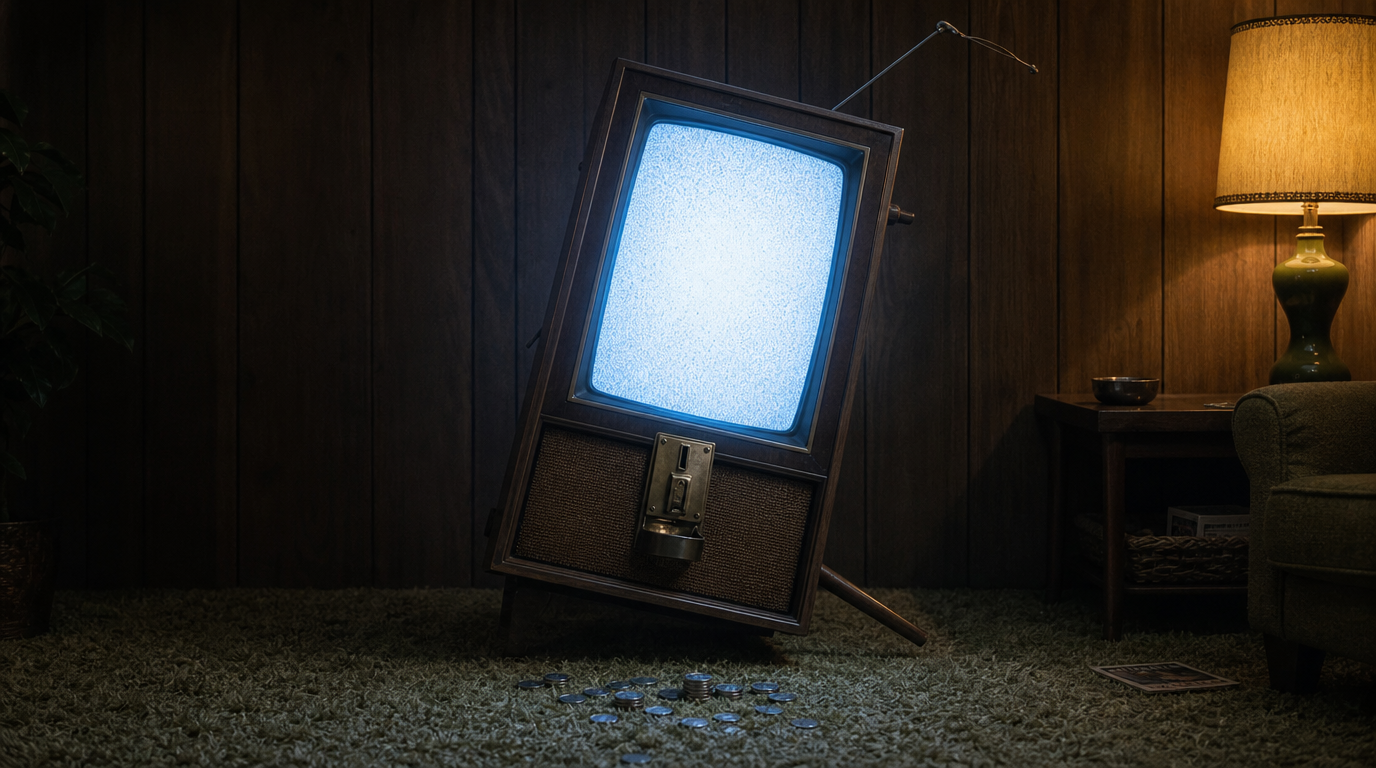
The money works like a carnival. First batch of episodes, free. You’re in now. You’re invested. The stepbrother has just revealed something. And then a wall goes up and the episodes cost thirty to fifty cents each, or ten to fifteen dollars for the whole series, with rewarded ads as the side door for people who’d rather pay in time than money.
That’s it. That’s the whole machine. A story, cut into coins.
Those are not trend numbers. Those are industry numbers. An entire parallel television business assembled itself inside the phone you’re holding while the trades were busy counting Netflix subscribers.
The Engine Is a Coin Slot Wearing a Story
Now the structure, because the structure is the actual art and almost nobody talks about it.
Every episode ends on a cliffhanger. Not most. Not the important ones. EVERY ONE. Sixty to ninety seconds of story, then a hard stop at the worst possible moment, then the next one. If you’ve ever read a Dan Brown chapter, you already know the rhythm, and if you’ve ever despised yourself at two in the morning for reading nine more of them, you know the business model too.
What that constraint does to the writing is the interesting part.
There is no second act. There isn’t room for one. A ninety-second episode can hold one reveal, one reversal, or one escalation, and it cannot hold two. So the writer’s entire job becomes identifying which single beat earns the slot and then cutting everything that isn’t that beat. No establishing shot. No weather. No character sitting in a car thinking about his father.
The camera lives in the face. Vertical framing means a 9:16 rectangle, which is a shape built for one human head and a doorway behind it. You cannot stage a wide. You cannot do an ensemble. The format is physically incapable of a David Lean landscape and it is PERFECT for a close-up of somebody realizing something, which is also, conveniently, the only shot the story has time for.
The exposition goes in the mouth. Characters say the plot out loud. Flatly. “I can’t believe my own stepbrother would buy the company out from under my dying father.” This reads as bad writing when you’re grading it as prose, and it isn’t. It’s a radio play with pictures, built for somebody half-watching on a bus, and radio plays have always said the plot out loud. Orson Welles said the plot out loud. Nobody’s taking his statue back.
The shoot is a sprint. Western productions run roughly $150,000 to $250,000 for a seven to ten day shoot that generates fifty to seventy episodes. Some Chinese productions come in near $50,000. For comparison, that’s a series for less than the catering line on a single day of a prestige drama, and I’m going to say the quiet thing: a lot of them are better paced than the prestige drama.
Don’t ask me to model the cohort retention on that. I’m not freaking McKinsey. But you don’t need a model to notice that when a format produces one number like that, every spreadsheet on two continents turns to look at it.
Then I Remembered Soap, and the Whole Thing Fell Over
Here’s where I lost an evening.
Because about twenty minutes into my first microdrama, somewhere around the part where somebody’s secret twin showed up, I got a very specific feeling. The feeling of having been in a room before. And the room was Soap.
If you’re under forty-five, stay with me, because this is the part of the post I actually care about.
Soap ran on ABC from September 1977 to 1981. Half-hour prime time comedy, created by Susan Harris, and it was built as a parody of daytime soap operas. Two families, the rich Tates and the working-class Campbells. Katherine Helmond as Jessica Tate, floating through catastrophe like a woman who had misplaced her car keys. Richard Mulligan as Burt. Cathryn Damon as Mary. Robert Guillaume as Benson, the butler who had the measure of every person in the house and the patience of none of them. And a very young Billy Crystal as Jodie Dallas.
What was in it, across four seasons: murder, adultery, amnesia, a cult, impotence, a mob hit, demonic possession, a communist revolution in a fictional South American country, a man who talked exclusively through a ventriloquist dummy, and an ALIEN ABDUCTION. Burt got taken by aliens and replaced with a duplicate. On ABC. At half past nine.
Every episode opened with an announcer speed-running the previous week’s lunacy, and closed with a deadpan string of life-or-death questions, then a promise that you’d find out next week. Confused? You won’t be.
Sit with the shape of that for a second.
Serialized. Cliffhanger at the end of every single installment. Plot delivered out loud by an announcer because the story moves faster than a human being can track. Melodrama played at a volume that would get you thrown out of a theater. Short runtime. Designed to be unmissable, week over week, for as long as they could keep it going.
That’s a microdrama. That’s just a microdrama with a laugh track and a network.
The Part Everybody Gets Wrong About Ellen
Now, a detour, and it’s a detour with a point.
Every few years the internet does a lap about Ellen and the Puppy Episode, April 1997, Ellen DeGeneres coming out on primetime network television, and it gets treated as the opening of the door. It was a genuinely enormous cultural event and I’m not here to take an inch off it.
But Jodie Dallas was on ABC in September 1977. Openly gay. A lead. Not a sweeps-week guest, not a coded best friend, not a tragic third-act diagnosis. Part of the main cast from the pilot, with a storyline involving a closeted professional football quarterback, which, in 1977, is a swing so far out over the plate that I’m still not sure how it got made.
TWENTY YEARS earlier. Two decades. A whole adult human being’s worth of time.
Was it handled well? Partly, and partly not. Gay rights activists at the time had real objections, and the objections were fair: some of the storylines leaned into stereotype, and later seasons walked the character’s sexuality back in ways that read today as a network losing its nerve in slow motion. Both of those things are true at once and neither one deletes the other.
But the record is the record. The first one through the wall was Billy Crystal, in 1977, in a show about a man being abducted by aliens.
Now the Receipts, Including the One That Wrecks My Own Argument
So here comes the easy version of my thesis: microdramas are just Soap, the panic is recycled, calm down everybody.
And I have to be honest about the hole in that, because the hole is big enough to drive Burt’s spaceship through.
Soap was authored. Susan Harris wrote it. One voice, four years, a sustained piece of work that knew precisely what it was doing, performed by actors who won Emmys for doing it. The show was a SATIRE. The absurdity was deliberate. The alien abduction was the joke, and every person on that set understood the joke.
Microdramas, by and large, are not kidding. The stepbrother reveal is not a comment on stepbrother reveals. And because the format is cheap and fast, the industry has a copying problem that has become a plague: successful scripts get cloned within weeks, original creators get stepped on, and in 2026 the Shortflix piracy case put the whole mess into a courtroom. China’s own regulator ran a 2026 campaign against what it called harmful, lowbrow and pirated content. That’s not a Western moral panic. That’s the market that invented it, flinching.
So no, a format that LOOKS like Soap is not Soap, if nobody involved is in on the joke. That comparison flatters the microdrama and I’d be a hack not to say so.
Here’s the part that puts it back on its feet.
Before Soap aired a single frame, ABC received roughly 32,000 letters about it. Nine were supportive. NINE. The Catholic Archdiocese of Los Angeles and the Southern Baptist Convention’s Christian Life Commission came out against it, most of them having never seen it, on the strength of a Newsweek preview that called it a sex farce and contained a factual error. Eighteen of ABC’s 195 affiliates refused to carry the premiere, and that grew to twenty by week two. The network dropped its ad rate from $75,000 a spot to $40,000 to keep advertisers from bolting.
And in 2026, Gaëtan Bruel, the president of France’s CNC, the body that runs French cinema, described the microdrama as “the perfect counter-example” of what France should stand for.
I’m not saying he’s wrong. I’m saying I have heard this exact voice before, in a different accent, about a show that TIME later called one of the hundred best ever made.
The moral panic is not evidence.
It’s just the sound a format makes when it arrives.
Why They’re Fun, Which Is the Question Nobody Asks
Let’s do the part that matters, because “is it art” is a boring question and “why does it work on me” is not.
Microdramas are fun for the same reason a well-built page-turner is fun, delivered at the tempo of a slot machine. The format has had every single thing removed from it except WANT. Somebody wants something, somebody else is in the way, and you find out what happens in forty seconds. There’s no theme to admire. There’s no craft to sit back and appreciate. There’s no middle.
Prestige television spent twenty years teaching us to be patient and then quietly stopped rewarding the patience. We all sat through the six-episode setup. Some of us are still waiting on the payoff, and a few of those shows got canceled before the payoff existed, which means we were being asked to invest in a promise the studio had no intention of keeping. A microdrama cannot lie to you that way, because the payoff is sixty seconds out, always, forever. It is the most honest contract in entertainment: give me forty cents and I will give you a reversal. Nobody is going to make you watch a man stare at a lake.
And they’re funny. Not on purpose, mostly, which is exactly how Soap’s targets were funny before Soap turned around and pointed at them. The daytime soaps of the seventies were not trying to be absurd. They were trying to be gripping, at speed, on a budget, and absurdity is just what happens to any story engine run at full throttle with the governor off. Soap noticed, and built a monument to it.
Here’s the closing of the loop. All those daytime soaps that Soap was mocking for going too far? They went further. By the eighties and nineties the real ones had possession, clones, cryogenics, returns from the dead on a schedule. They became Soap. The parody was not an exaggeration, it was a FORECAST.
Which is the thing I’d bet money on happening here. Somebody is going to make the microdrama that knows it’s a microdrama. And then every microdrama will become that.
And Yes, We’re Doing This
Which brings me to the announcement, placed down here at the bottom where only the people who actually read things will find it, which is on purpose.
Blowing Frog has opened a microdrama division. Concept, script, shoot, post, the whole cycle. Vertical from the first frame, not cropped down from something that was supposed to be a film. Eight to ten day shoots. Cliffhanger engineering as an actual discipline rather than an accident. English, Spanish and Portuguese, because the Latin American market for this is about to be enormous and the people building for it right now are mostly building in the wrong language.
The page is here: blowingfrog.com/microdramas
Got a story? We’ll make it a series.
And if you think this is beneath cinema, I’d point out that the last format that got called beneath cinema was television, the one before that was cinema, and the one before THAT was the novel, which the eighteenth century was certain would rot the brains of young women. Everyone’s always right on schedule.
The Firing Squad
One last thing about Soap, and then I’ll let you go back to your phone.
ABC canceled it after four seasons. The writers had planned a fifth. So the series ended, in 1981, on unresolved cliffhangers across the board. Jessica Tate was standing in front of a firing squad in a South American jungle. Chester was in a basement about to shoot two people. Nobody in America ever found out what happened to any of them.
The story stopped because the money stopped.
That’s the only real difference between 1977 and the thing on your phone tonight. Not the length. Not the vertical. Not the acting, God knows. The difference is that in 1977 the network decided when the cliffhanger became permanent.
Now it’s you. Forty cents at a time.
Jessica Tate is still standing in front of that firing squad. Nobody ever paid to find out.
Quick Questions From the Cheap Seats
What is a microdrama?
A microdrama, known as duanju in China where the format originated, is a serialized drama made for vertical phone viewing. Episodes run roughly 60 to 90 seconds and a series typically contains 50 to 100 of them, totaling about the length of a feature film. Episodes are shot in 9:16 portrait and nearly every one ends on a cliffhanger.
How do microdrama apps make money?
Most use a hybrid model. The first batch of episodes is free, after which viewers either pay to unlock further episodes (commonly $0.30–$0.50 per episode or $10–$15 for a full series), watch rewarded ads, or take a subscription. The free opening episodes exist to establish narrative investment before the paywall appears.
How big is the microdrama market?
China’s duanju market reached 50.44 billion yuan (about $6.91 billion) in 2024, growing 34.9% year on year and surpassing China’s total annual box office for the first time. Globally the format was worth roughly $11 billion in 2025, including about $1.3 billion in the United States, with projections approaching $26 billion by 2030.
Is James Franco really in a microdrama?
Yes. Franco stars as Jimmy Franks, an advertising agency head facing criminal and supernatural threats, in Love, Lies & Frank on the platform Shortical, released August 2026. It is produced by Knockout Shorts, directed by Eric Wang Schwager and written by Melissa Lynn Moore, and is among the first microseries made under SAG-AFTRA’s Verticals Agreement. Franco is reported to be the first Oscar nominee to headline a microseries.
What was the TV show Soap?
Soap was an ABC primetime sitcom that ran from September 1977 to 1981, created by Susan Harris as a parody of daytime soap operas. It followed the wealthy Tate family and the working-class Campbells through murder, amnesia, demonic possession, a cult and an alien abduction, with each episode ending on cliffhanger questions posed by an announcer. It produced the spinoff Benson and appeared on TIME’s 100 Best TV Shows of All-TIME list in 2007.
Was Soap the first US show with a gay lead character?
Soap was among the earliest American primetime series to feature an openly gay character as part of the main cast: Jodie Dallas, played by Billy Crystal, from the 1977 premiere. That is roughly twenty years before Ellen’s 1997 “Puppy Episode,” which is more commonly cited as the milestone. Contemporary reaction was divided, with some gay rights advocates objecting that certain storylines relied on stereotype.
Rant over. I have forty-seven episodes left and a stepbrother situation to resolve.
Somewhere in a jungle in 1981, a woman in a white dress is still waiting for someone to put a coin in the slot.